
Innovation Stagnation
The Myth of the Modern Marketing “Golden Age”
Marketers love to boast about our golden era of innovation. Fancy tech stacks. AI insights. “The right message, to the right person, at the right time.”
Newsflash: that’s fantasy.
Sure, digital tools have their perks - real-time results, affordable testing, monetized media - but they’ve also unleashed a flood of ad fraud, privacy breaches, and thumb-scrolling zombies lost in TikTok loops.
But this isn’t a rant. It’s a call to rediscover love in two unexpected places.
Real Innovation, Hiding in Plain Sight
Two quiet revolutions have reshaped marketing - without most of us noticing: podcasts and QR codes.
Podcasts proved audiences still crave depth. People will listen for an hour, stay for the story, even hear your ads - because they trust the host. That’s engagement algorithms can’t fake. Compare that to banner clutter and “engagement” metrics built on phantom clicks. Podcasts deliver attention that’s earned, not tricked.
The QR Code Comeback Story
Then there’s the QR code - the SpongeBob-looking square once reserved for checkout scanners. You see them everywhere now, but here’s the kicker: most marketers stop halfway.
99% of QR codes point straight to a basic landing page begging for an email and flashing a 10% discount. That’s not innovation - it’s digital déjà vu.
And when visitors leave without buying? They vanish into the retargeting abyss - adding fuel to competitors’ audience pools. You spent the money. They get the lead.
The Last Link in the Chain
So how do you stop that leak? Simple. Use QR codes as a mobile opt-in gateway - capturing consent before routing visitors to your site. Suddenly, your prospect becomes part of your private list, not the internet’s open market.
Mobile is still the most responsive, least spammed channel out there - built on permission, not intrusion. Messages get seen and acted on.
Be the One Who Gets It
Marketing will always be a copycat league. But this time, you can be the one they copy. Use QR-to-mobile opt-ins to keep your prospects close - and your competition guessing.
That’s the leap Beyond Mobile was built for.
By: Tom Chillot | President/CEO

Articles like these are my nemesis: Email Displacement: The Channel Most Vulnerable To AI Job Loss 08/06/2026
Not because I have my head buried in the sand, lamenting, “Oh no, AI is going to replace all that I do, and all that the people I love do, and then once we reach Singularity - which is coming any day now - the AIs will be sentient, won’t need us, and we’ll all be looking for John Connor to save us from the Terminator machines.”

Every part of the sales funnel is important, but at the very top of it is where it all starts… with your top-of-funnel marketing. It’s your first handshake, you first opportunity to introduce your brand… what it represents, what it offers, the value it provides, etc. to prospects. It’s generally the largest part of the marketing/sales funnel and is designed to get in front of eyeballs, educate potential customers, brand awareness (for those who may not even have any awareness about your brand at all), and ultimately generate leads.

My Best Round of the Year Came After My Worst Moment
I pushed my golf cart into a creek a couple of weeks ago. Not in a metaphorical "I had a rough start" sense. I literally let go of the handle on a slope with the full expectation that it would gently roll down the hill and be waiting for me at the bottom. Instead, I watched in slow-motion horror as it took a rogue left turn and I was left standing powerless as it careened wheels over handle into the muddy waters while my playing partners (barely) tried to stifle their laughter. Everything ended up taking a dip in the creek including my clubs, car keys, and phone.
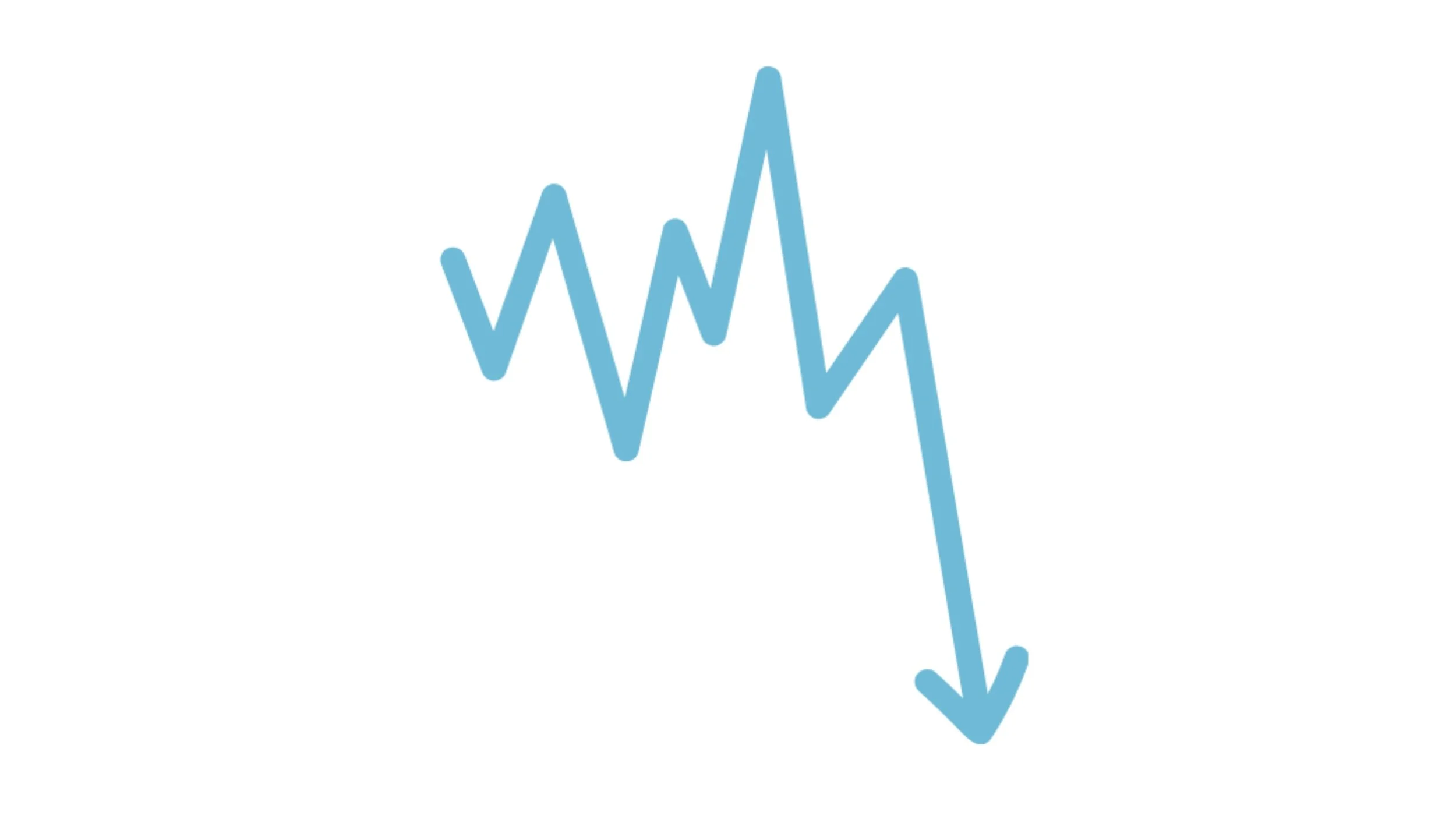
The Trade Desk’s stock is down about 75% from its 52-week high. NewsCase and Sharper Trades cite reasons such as disappointing earnings reports, removal from the Nasdaq-100, increased competition, and internal challenges.
When a company gets big enough, problems migrate to the macro. There’s usually a top-down analysis of financial problems that explains the stock price decrease. But if you simply look at TTD’s core offering, maybe this decline was predictable.
Advertising on the open web is like advertising in the wild west. Your ad can basically end up anywhere, and as long as the live dashboard shows attributed clicks, no one bats an eye. According to an ANA report, about 36 cents of every dollar spent on programmatic web ads actually reaches the consumer.

What happened:
An Ashley Furniture employee (@stefisthechef) recently went viral with his raps about couches and mattresses. His videos racked up millions of views. They weren’t videos written, produced, or approved by their marketing team. They were just organic and natural videos created by a guy (a sales guy). That’s top-of-funnel marketing at its purest. Users who’ve never engaged with a brand all the sudden become aware and are curious about a brand. And it was all free!

Your emails might say “delivered.” That doesn’t mean they’re being seen.
According to Unspam's 2025 Email Deliverability Report, deliverability is the single biggest factor separating elite performers from everyone else. Gmass research shows strong campaigns achieve up to 5% response rates, while campaigns with poor deliverability struggle to hit 1%.

Marketers love to boast about our golden era of innovation. Fancy tech stacks. AI insights. “The right message, to the right person, at the right time.”
Newsflash: that’s fantasy.
Sure, digital tools have their perks—real-time results, affordable testing, monetized media—but they’ve also unleashed a flood of ad fraud, privacy breaches, and thumb-scrolling zombies lost in TikTok loops.
But this isn’t a rant. It’s a call to rediscover love in two unexpected places.

Today’s marketing world is obsessed with ROAS, CPC, and CPS. We use them to validate performance, justify budgets, and defend every dollar spent.
But almost no one talks about a metric that sits before all of those:
“COBS” - the Cost of Being Seen.
In a digital environment where attention is fragmented and competition is louder than ever, visibility has become just as valuable as conversion. Understanding what you’re paying simply to get in front of a consumer’s eyes is critical, especially for companies in their growth stage.

“It’s because the other teams can’t stop looking at those damn pinstripes”. That’s Frank’s theory on the Yankees’ historic dominance quoted from the movie Catch Me If You Can. If the marketing landscape is baseball, then SEO is the pinstripes. While that metaphor might be a bit of a stretch, there does seem to be an overt proclivity for advertisers to focus on how search engine advertising is changing without looking at other very important cogs in the machine.
The battle between online publishers and AI search engines has been widely discussed. The dip in ad revenue is no joke and there’s a legitimate claim that AI summaries are more or less theft. This dynamic has begun to consume the metrics, strategies, and narrative for marketers. Let’s take a few steps back. Do CPG/retail companies even need a webpage?

In the modern digital marketing era, Search Engine Optimization has been the workhorse tactic favored by advertisers of all sizes; a reliable way to place one’s company directly in front of a customer and funnel organic traffic to their website. However, the crutch that many companies leaned on is wobbling many businesses are starting to realize that search engines are slowly seeing a shift in the way people are using them. With A.I. reshaping search, social media becoming the go-to discovery tool, and Google itself keeping more users on its own platform through zero-click results, the traditional SEO game is no longer what it used to be. The question marketers face now isn’t how to optimize for search engines, but how to adapt in a landscape where SEO’s influence is steadily declining.

Let’s just call it what it is: it’s borderline malpractice that mobile messaging (SMS/MMS)—the most effective channel in direct marketing today—remains sidelined in most customer acquisition strategies.
While brands continue to invest millions in lower-response tactics like digital programmatic display—less personal, wrought with fraud, and actively ignored by consumers—the one channel that achieves over 90% open rates within minutes of delivery is left waiting in the wings. Why? Because it’s opt-in only.

Marketing to seniors has always relied heavily upon THE Alpha channel: Direct Mail. While still a vibrant conduit to reach that cohort today (and one in which we invest heavily for our clients), as Mr. Bob Dylan suggested, "The Times They Are a-Changin'."
Over the last two decades, we have effectively helped advertisers in the Medicare, medical device, financial, and pharma spaces, all of which define seniors as a primary target market. Mail continues to be a workhorse for those offers, but don't blink; there's a new game in town.

The biggest challenge for modern marketing managers is simply getting messaging noticed. And by "noticed," I mean actual human beings viewing ads. LinkedIn is chock-full of stories of programmatic ad fraud, where real people only see a fraction of the ads supposedly served (thank you, Dr. Augustine Fou + cohorts!). Hucksters, fraudsters, 'made for advertising' websites (MFAs), and AdTech vendors who claim to serve ads but never do, steal money from legitimate advertisers in broad daylight ... all driven by the pressure to achieve impossible campaign results.

The LIV Golf Tour has been in the news lately, announcing a merger with the PGA Tour. They held a recent tournament stop in Washington DC a few weeks ago. The lead up and marketing of the event was outstanding - I purchased a couple of tickets for my wife and me. For the non-golfers, the LIV tour is a disrupter, competing against the PGA tour by luring some of golf’s biggest names with guaranteed money. Whereas on the PGA tour, prize money is only awarded to those who win. (Well, to those who make the cut at each tournament, but let’s not go into the weeds).

I’m a panic shopper. Christmas comes the same day in the same month, every year. This should afford me the ability to purchase gifts throughout the year; stocking up on stuff I know my wife would really love. She’s great at this. By the time the holidays roll around she's already bought for everyone, having started as early as summer. Stress-free and simple.

I was recently asked a simple question, by someone relatively new to adtech -- "if there's so much fraud, who's making all that money?" My answer surprised him. My answer was "everyone." He was expecting me to tell him about crime syndicates, nation states, and master hackers like the ones aggrandized in TV shows and movies. But the proceeds of ad fraud are far more mundane and widespread than that. Any fraud investigator will tell you that the most reliable way to find fraud is to "follow the money." So let's do just that.

We live in the most generous time in human history…even though the 24 hour news machine would have us believe that we live in a modern day Sodom and Gomorrah. But it’s true. By any statistical measure, we give more today to those in need than any time in history, adjusted for inflation.